Port of Auckland Export Capacity Crisis: How Infrastructure Bottlenecks Are Choking New Zealand’s Trade Growth
Port of Auckland is grappling with severe capacity constraints that are creating significant delays for New Zealand exporters, particularly affecting the country’s lucrative seafood and wine sectors. The infrastructure bottlenecks come at a critical time when export demand is rebounding strongly, raising questions about Auckland’s ability to maintain its position as New Zealand’s primary export gateway.
New Zealand’s largest port is facing an unprecedented capacity crunch that threatens to undermine the country’s export competitiveness. As trade volumes recover from pandemic lows and exporters rush to capitalise on improved global demand, Port of Auckland’s infrastructure limitations are becoming increasingly apparent. The situation has reached a tipping point where exporters are experiencing delays of up to two weeks, potentially jeopardising New Zealand’s reputation as a reliable supplier in international markets.
The timing couldn’t be worse for New Zealand’s export economy. With the country’s seafood industry worth over $2 billion annually and wine exports approaching $2.5 billion, any disruption to the supply chain through Auckland has far-reaching consequences. The port handles approximately 38% of New Zealand’s total trade by value, making it the critical lynchpin in the nation’s export infrastructure.
Export Volume Surge Exposes Port Limitations
The current crisis stems from a perfect storm of factors converging on Auckland’s waterfront. Export volumes have surged beyond pre-pandemic levels, with container movements increasing by 15% year-on-year. This growth has overwhelmed the port’s existing infrastructure, which was already operating near capacity before the recent uptick in trade.
Seafood exporters have been particularly hard hit by the delays. New Zealand’s premium lobster, salmon, and mussel products require time-sensitive shipping to maintain quality and command top prices in Asian and European markets. A two-week delay can mean the difference between premium pricing and distressed sales, according to Seafood New Zealand, which reports that some exporters are already switching to alternative ports despite higher costs.
Wine exporters face similar challenges, with vintage timing critical for market positioning. The industry’s peak export season coincides with harvest periods, creating additional pressure on port capacity during these crucial months. Major wine regions like Marlborough and Central Otago rely heavily on Auckland’s port infrastructure to reach international markets efficiently.
Infrastructure Investment Lag Behind Demand
The root cause of Auckland’s export capacity issues lies in decades of underinvestment in port infrastructure relative to trade growth. While New Zealand’s export economy has expanded significantly over the past two decades, port capacity has failed to keep pace with demand. The situation has been exacerbated by the port’s constrained geographic footprint, surrounded by valuable Auckland waterfront real estate that limits expansion options.
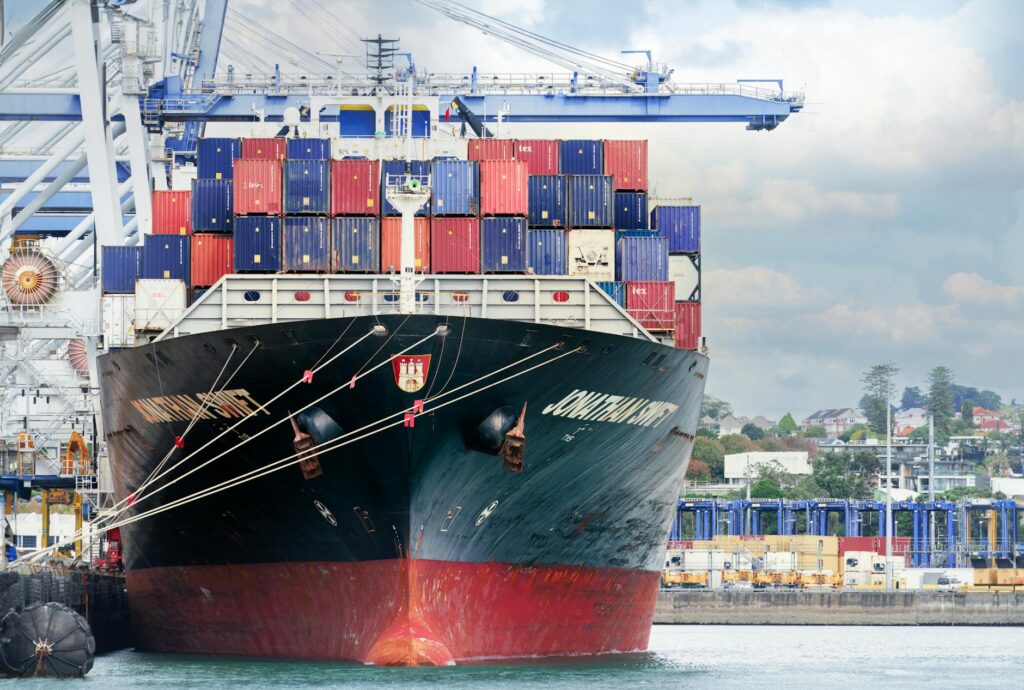
Port of Auckland’s container terminal capacity currently sits at approximately 900,000 twenty-foot equivalent units (TEU) annually, but actual throughput is approaching this theoretical maximum. Industry experts suggest the port needs to increase capacity by at least 30% within the next five years to accommodate projected trade growth, yet current expansion plans fall well short of this target.
The port’s automation initiatives, while promising long-term efficiency gains, have contributed to short-term capacity constraints. The transition to automated container handling systems has created operational bottlenecks as staff adapt to new technologies and processes are refined. This learning curve comes at the worst possible time, with export demand at historical highs.
Regional Ports Struggle to Fill the Gap
Alternative port options remain limited for many exporters, particularly those in Auckland’s immediate vicinity. Tauranga’s Port of Tauranga, while larger by container volume, lacks the specialised facilities and established logistics networks that many export industries require. The additional transport costs and time involved in trucking goods to alternative ports can erode export margins significantly.
Some exporters have begun exploring options through smaller regional ports, but these facilities often lack the frequency of international shipping services that major exporters require. The wine industry, in particular, has investigated using Napier Port for some shipments, but the limited sailing schedules mean longer lead times to key markets.
The situation highlights New Zealand’s over-reliance on a single port facility for a significant portion of its export trade. This concentration of activity creates systemic risk for the entire export economy, as demonstrated by the current capacity crisis.
Critical Analysis: Short-Term Pain, Long-Term Questions
The current export capacity crisis at Port of Auckland represents more than just a temporary logistics challenge – it exposes fundamental weaknesses in New Zealand’s trade infrastructure strategy. While port officials point to upcoming capacity improvements and efficiency gains from automation, the timeline for meaningful relief extends well beyond the immediate needs of exporters.
The situation bears troubling similarities to the container shipping crisis that followed the 2008 global financial crisis, when inadequate port capacity contributed to New Zealand exporters losing market share to more reliable competitors. History suggests that reputation damage from shipping delays can take years to repair, even after infrastructure issues are resolved.
Furthermore, the focus on short-term capacity fixes may be misplaced given longer-term structural changes in global trade. The shift toward larger container vessels and hub-and-spoke shipping models increasingly favours ports with substantial scale and connectivity. Auckland’s geographic constraints may ultimately limit its ability to compete with larger regional ports in Australia and Asia.
The government’s reluctance to intervene directly in port operations reflects a broader philosophical approach to infrastructure investment that prioritises market-led solutions. However, the strategic importance of port capacity to New Zealand’s export economy may justify more direct intervention to ensure adequate investment in critical infrastructure.
Industry Adaptation and Future Outlook
Despite the current challenges, some export industries are adapting successfully to the capacity constraints. Wine exporters have begun consolidating shipments and improving inventory planning to work around port delays. The seafood industry is exploring new preservation technologies that could extend product shelf life and reduce time sensitivity.
These adaptations, while necessary in the short term, come at a cost. Exporters are investing in additional warehousing, improved cold storage facilities, and alternative logistics arrangements – expenses that ultimately reduce the competitiveness of New Zealand exports in international markets.
The port’s proposed solutions include expanding container stacking areas, improving rail connectivity, and completing the automation transition by 2025. However, these measures may only provide temporary relief if export growth continues at current rates. More fundamental questions about Auckland’s role as New Zealand’s primary export gateway may need to be addressed.
Conclusion
Port of Auckland’s export capacity crisis represents a critical juncture for New Zealand’s trade infrastructure. While immediate solutions focus on operational improvements and efficiency gains, the underlying issue of inadequate port capacity relative to export demand requires more substantial intervention.
The seafood and wine export sectors, as bellwethers of New Zealand’s export performance, are already feeling the impact of delays and increased costs. Their experience suggests that without significant capacity expansion, Auckland’s port may become a bottleneck that constrains rather than enables New Zealand’s export growth ambitions.
The challenge extends beyond Auckland to broader questions about port strategy, infrastructure investment, and New Zealand’s position in evolving global trade networks. The current crisis may ultimately catalyse necessary discussions about developing alternative export gateways and reducing over-reliance on a single port facility.
For now, exporters must navigate an increasingly constrained system while hoping that promised improvements materialise before competitive pressures force them to seek alternative routes to market. The stakes could hardly be higher for New Zealand’s export-dependent economy.